The Michael Kay Series
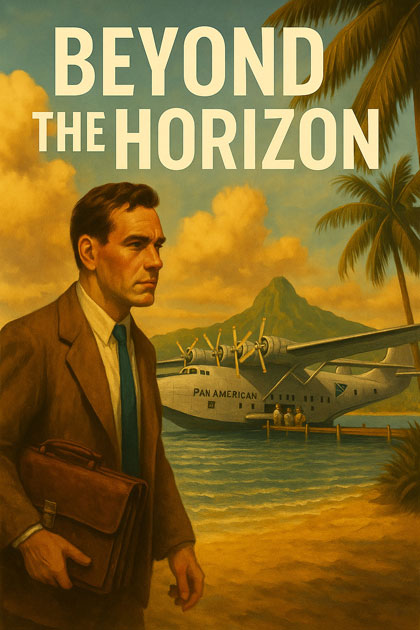
Beyond the Horizon
December 1941. MIT physicist Michael Kay detects something no one believes possible: a Japanese carrier fleet approaching Hawaii, hours before the attack on Pearl Harbor.
His experimental radar works. The attack that was supposed to change history doesn't happen as expected. Instead, Kay finds himself at the center of an alternate history where every decision creates consequences no one can predict.
As the war unfolds in unexpected directions, Kay's scientific work draws him deeper into projects far beyond radar. What begins as an effort to protect lives gradually becomes something much more dangerous, forcing him to confront a question he can't escape: Can a scientist control what the world does with his discoveries?
Beyond the Horizon is Book One in the Michael Kay series, an alternate-history technothriller about science, power, and the consequences of changing history.
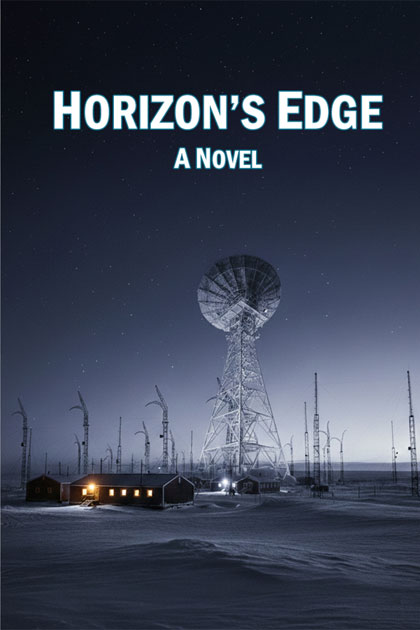
Horizon's Edge
1958. The Cold War has entered a dangerous new phase, and the next battlefield may be above the Earth.
Michael Kay is asked to help develop an orbital defense system that could give the United States an overwhelming advantage. He knows where the technology could lead, and he has no desire to repeat the mistakes of the past.
Across the Iron Curtain, Soviet physicist Sergei Antonov faces the same dilemma from the other side. Trapped between scientific duty and a government that demands obedience, Antonov becomes an unlikely ally.
With both nations moving toward weapons that could act faster than human judgment, two scientists must find a way to stop a system neither side may be able to control.

Horizon's Divide
1961. The Berlin Wall rises, and the Cold War enters a new and dangerous era. Meanwhile, the systems designed to verify a fragile nuclear peace are producing numbers that don't add up.
Michael Kay suspects someone is manipulating the data, but his warnings are buried by the very institutions he once trusted.
When the evidence leads across the Berlin Wall, Kay turns to old allies and unlikely partners for help. A physicist trapped in East Germany may hold the proof they need, but getting her out could be more dangerous than discovering the truth.
In a world where governments depend on machines to tell them what is real, Kay must determine who is manipulating the numbers-and why.

Horizon's Reckoning
1969. After decades spent trying to distance himself from the consequences of his scientific work, Michael Kay is finally content to remain at MIT.
Then a cryptic message from an old friend pulls him into a dangerous investigation in Brazil. What begins as a suspicious political kidnapping leads to something far more disturbing: scientists, extremists, and powerful interests working together on a plan that could destabilize an entire country.
Worse, Kay discovers that the people behind the conspiracy have been studying ideas he helped develop years earlier.
Once again, Kay faces the problem he has spent a lifetime trying to escape: ideas cannot be taken back once they've been released into the world.